Turn waste into treasure! Jianhe County, Guizhou Province has successfully developed a biological feed fermented by waste mushroom sticks, which greatly reduces the breeding cost.
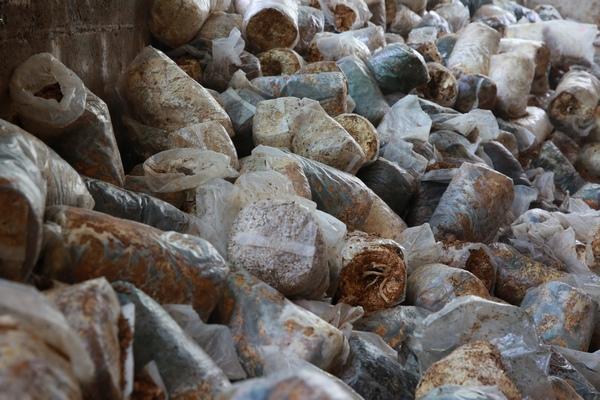
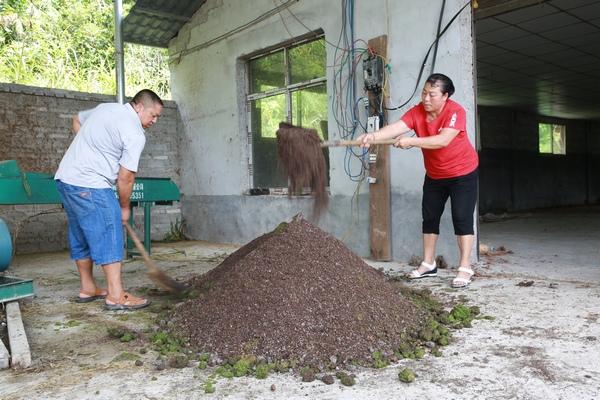
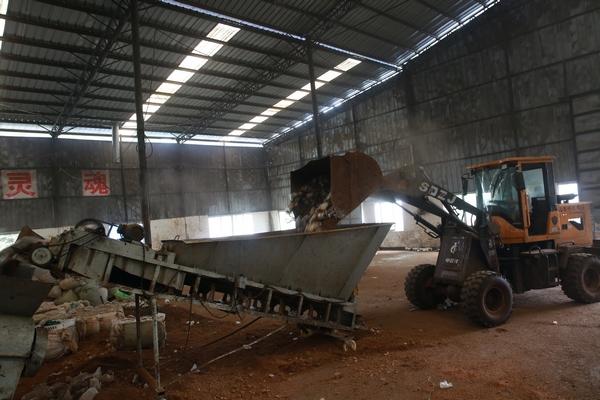
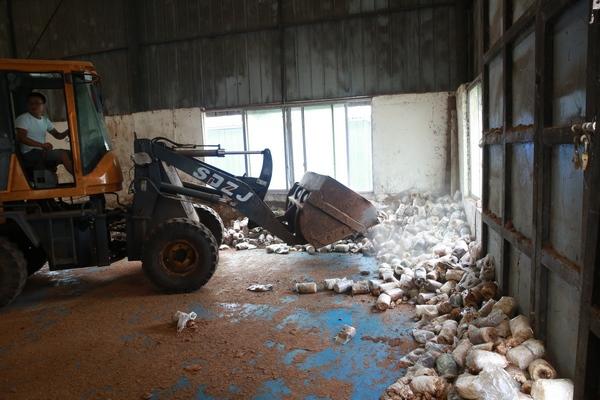
In 2017, Jianhe County of Guizhou Province clearly focused on the development of edible fungi as "one county and one industry". The annual planting amount of edible fungi in the county was over 100 million sticks, and a large number of fungus sticks with fungus seeds could only be treated as fertilizer. In July this year, with the joint efforts of other bioengineering research institutes, Jianhe County successfully developed a biological feed fermented by waste mushroom sticks, and finally turned waste into treasure.
The raw materials of edible fungus sticks are mainly rice straw, wheat straw, corn stalk, bagasse and other crops. Although the sticks with fungus seeds still contain a lot of nutrients, the discarded sticks contain toxins that are not conducive to animal growth and are difficult to remove, so bags of discarded sticks can only be treated as fertilizers. According to Yang Qian, an agronomist of Jianhe County Agriculture and Rural Bureau, the biggest difficulty in using waste mushroom sticks as bio-fermented feed lies in softening the crude fiber inside, and the second difficulty lies in decomposing and eliminating some toxic aflatoxins inside.
It’s a pity to leave it useless and discard it. After a long period of research, in July this year, Jianhe County finally successfully developed a biological feed fermented by waste mushroom sticks. The finished product meets the GB13078-2017 Hygienic Standard for Feed, and it has been approved by China and internationally recognized by testing institutions.
"Through the comprehensive function of biological fermentation, we can soften crude fiber, degrade aflatoxin and improve the transforming power of nutrients, so that our waste mushroom sticks can be turned into treasure, and through resource integration, we can waste mushroom sticks and produce their due application value again." Yang Qian, an agronomist at Jianhe County Agriculture and Rural Bureau, said.
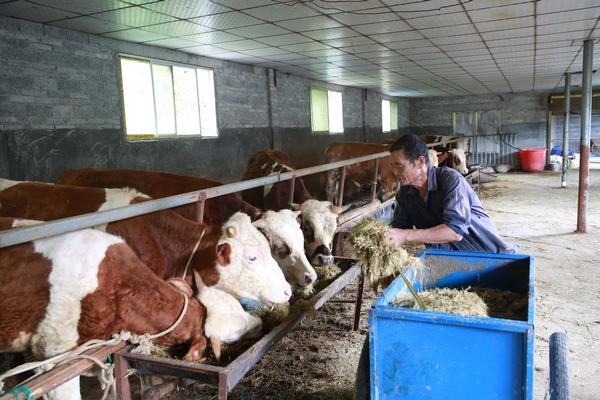
In a workshop in Jianhe County Industrial Park, the reporter saw that the forklift was crushing the waste mushroom sticks. The crushed mushroom sticks were not treated as fertilizer, but were reprocessed as feed for livestock such as pigs, cows and chickens. Through the biological mixed strain fermentation technology, the fermented feed of waste mushroom sticks was developed and produced. The biological material can replace 50% of feed corn in livestock feed and reduce the cost of corn feed by more than 40%.
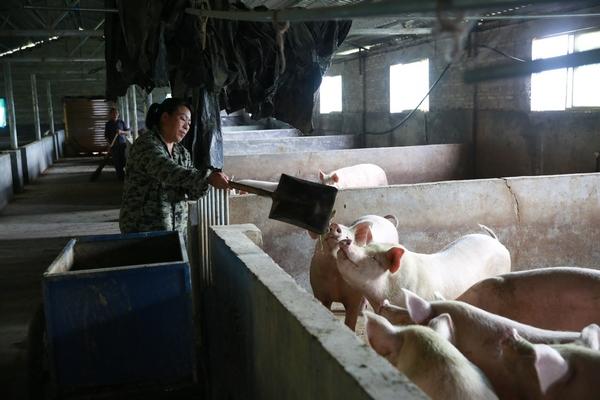
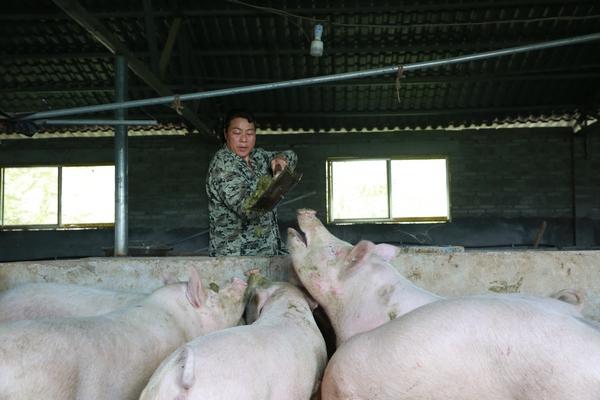
Long Shengmei was one of the first large pig breeders to use this feed. Although she has nearly 30 years of experience in breeding, it is the first time for her to hear that the biological feed fermented by waste fungus sticks is used to feed pigs. With the mentality of giving it a try, she tried to feed it for a while and never thought that the effect was good.
"Now we feed this bio-material, pigs are willing to eat it, and the cost is very low. In addition, it has strong disease resistance. This bio-material is the greatest help for our farmers," said Long Shengmei, a pig farmer in Jianhe County.
Like Long Shengmei, at present, many farmers in Jianhe County are trying to feed the biomass fermented by waste mushroom sticks, and the average daily weight gain of their pigs is 1.1 kg/day/head, which is the same as the growth rate of using full-price feed. According to the cost calculation, using full-price feed on the market, a big pig needs at least the cost of 10 yuan a day, while using fermented materials only needs 6 yuan at most, which greatly reduces the cost of farmers.
It is reported that the success of this technology will effectively alleviate the dependence of feed for under-forest farming and ecological animal husbandry and aquaculture in this county on corn, and get rid of the dilemma of high cost and low profit of farming without market competitive advantage. In the future, the county will drive more farmers to realize ecological farming through this technology, further boosting the virtuous circle of ecological farming industry. (Yang Yuanhong, Peng Jun, Yang Yuman)
Reporting/feedback