Hanchuan and Wuhan crabs took the lead in listing on the water, and their prices declined steadily compared with those before the National Day Golden Week last year.
Cao Lei, Chief Reporter of Extremely Eye News
Photojournalist AARON Li
Less than two days before the National Day Golden Week, crabs from Hubei finally began to appear on the market in large scale. Jimu journalists have visited multi-level markets for several days and learned that since September 27th, crabs from several new urban areas in Wuhan, Hubei Province, and the surrounding Xiaogan Hanchuan have led the batch production, and the prices have steadily declined compared with the same period of last year.
According to crab experts in the province, because the growth cycle of Hubei crabs is different from that of Jiangsu crabs, the domestic crab market from September to early October is still dominated by Jiangsu goods, and local crabs have just started the delivery period, but then crabs from different producing areas mature into the market every month, and the whole water season will last until December.
Wuhan products are the main products of Hubei crabs that come out in batches.
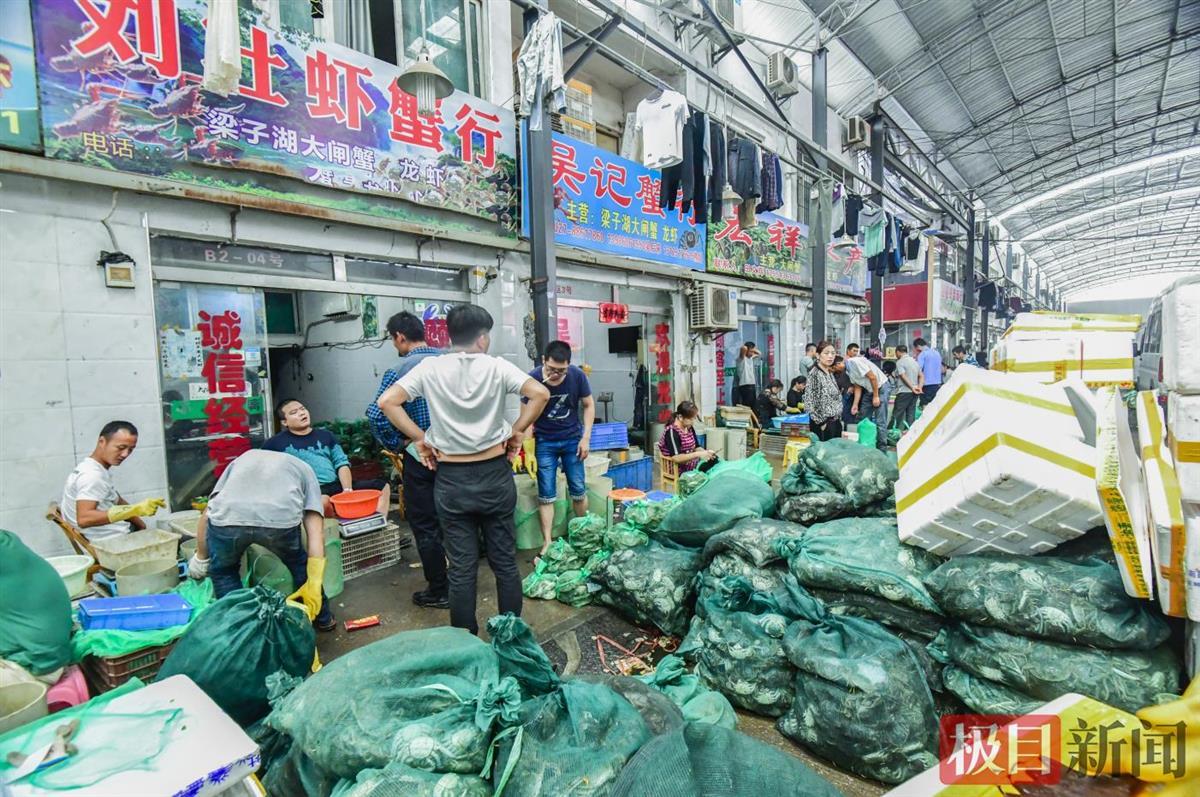
On the morning of September 28th, Jimu journalists saw in a crab street near Liji North Road in Hankou that there was a whole crab pot in front of every house, which was packed according to different specifications. From time to time, citizens gathered around to pick out big crabs with stronger "sports ability".
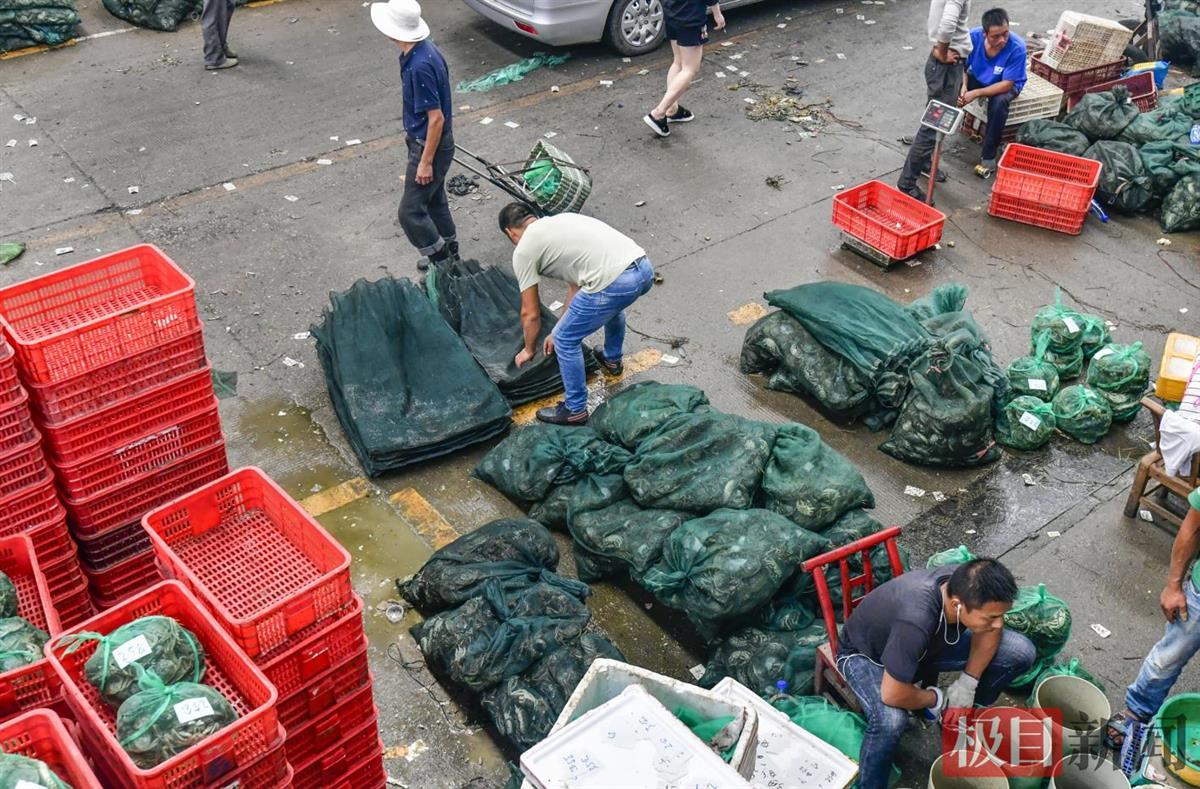
"It’s National Day in two days. There are many people who want crabs, both big and small. You choose first." A shopkeeper was too busy tying crabs and packing gift boxes to attend to the consultant’s questions.
However, when the reporter proposed to buy local crabs in Hubei, the owner said that "only crabs from Wuhan and Hanchuan" were available, and more crabs from Jiangsu were still available on site: "Crabs from Jiangxia, Caidian and Dongxihu have just arrived in large quantities, and they are all very fresh."
In the afternoon, the reporter visited three fresh markets, fruit and vegetable stores and supermarket chains along Houhu Avenue in Hankou, and found that there were really few crabs from main producing areas such as Honghu and Jianli in Hubei. Most of the local goods on sale come from several new urban areas in Wuhan and the surrounding areas such as Xiaogan Hanchuan.
Although it is fresh goods that have just come out of the water, the price of crabs in Hubei is not higher than that of crabs in Jiangsu that have been sold for more than half a month. According to the visit, the cheapest male crab is from 10 yuan to 11 yuan, the female crab is from 13 yuan to 15 yuan, and the most expensive female crab is from 28 yuan to 30 yuan, which is 2-3 yuan lower than that ten days ago.
Farmers produce 10,000 Jin of water every day, and the price drops slightly year-on-year.
In order to find out the water situation of crabs in Hubei in the new season, on the morning of September 29, the reporter first came to Beihu Agricultural Special Aquatic Products Cooperative in Dongxihu District. Zhang Manrong, the person in charge, is busy with farmers to pump crabs and repackage them, and then send them to Baishazhou agricultural and sideline products market.
"Too busy these days before the National Day! We have to send at least 5,000 to 8,000 kilograms of crabs every day. " Zhang Manrong said that at present, the cooperative has a breeding area of nearly 3,000 mu. Before the Mid-Autumn Festival, only a small amount of crabs were lifted: "At that time, it was really not mature enough to have relatively high commodity value, and now the first batch of large-scale fishing can be carried out."
Missed the Mid-Autumn Festival consumption peak season, local crab farmers hope to "fire" during the National Day consumption schedule. According to Zhang Manrong’s statistics, the water output on September 28th and 29th can reach nearly 10,000 Jin.
However, due to the recent high temperature in Wuhan, although the crabs with concentrated water have considerable commercialization, they have not yet reached the fully mature standard, and the purchase price of the land is slightly cheaper than that of the first two days of the National Day in previous years. For example, the four and a half Dagong crabs purchased by brokers in the field are around 36 yuan per catty, and they can be sold to 38 yuan per catty in previous years; Two and a half large female crabs are around 56 yuan per catty, but last year they can be sold as much as 60 yuan per catty, with a price reduction of about 7%.
Hubei crabs matured late, so they took part in the National Day competition by "selling and catching".
After finding out the situation from the crab breeding base in Dongxihu Lake, the reporter went to Wuhan Zunqin Aquaculture Base in Honghe Village, Xiaosi Township, caidian district. The farmers here have just sent away the last batch of crabs that day, and the destination is also Baishazhou agricultural and sideline products market.
At the base, Fang Yinhua, the person in charge, introduced that the shipment of crabs before the National Day was 8,000 kg to 10,000 kg per day: "This is not the time when the crab yield is the largest. Now we are basically’ catching by sales’ to ensure the supply."
In the face of the National Day Golden Week in the peak consumption season, why are crab farmers reluctant to pump a lot of water? In this regard, Fang Yinhua said that the maturity of Hubei crabs is at least one month later than that of Jiangsu crabs. Now only crabs in Wuhan and surrounding areas can be listed in large quantities, but they still cannot be compared with Jiangsu crabs in total.
More importantly, although the local crabs can be eaten, they are still "one breath away" from full maturity, so they may be slightly inferior in competitiveness: "We definitely want to make the reputation of local crabs and sell them at a higher price, which must ensure the quality." Fang Yinhua said.
In this regard, the reporter then got a similar statement from Hanchuan Tiange Crab Breeding Cooperative. According to reports, in the middle and late September, crabs in Hanchuan took the lead in selling water in the province, but the amount supplied to the market was very small compared with the amount of ponds stored, in order to raise crabs more mature and then sell them in large quantities: "In recent years, the competition between Hubei crabs and Jiangsu crabs has been head-on while ensuring their own quality."
The crabs in Jianli main producing area of Honghu Lake relay out of the water until December.
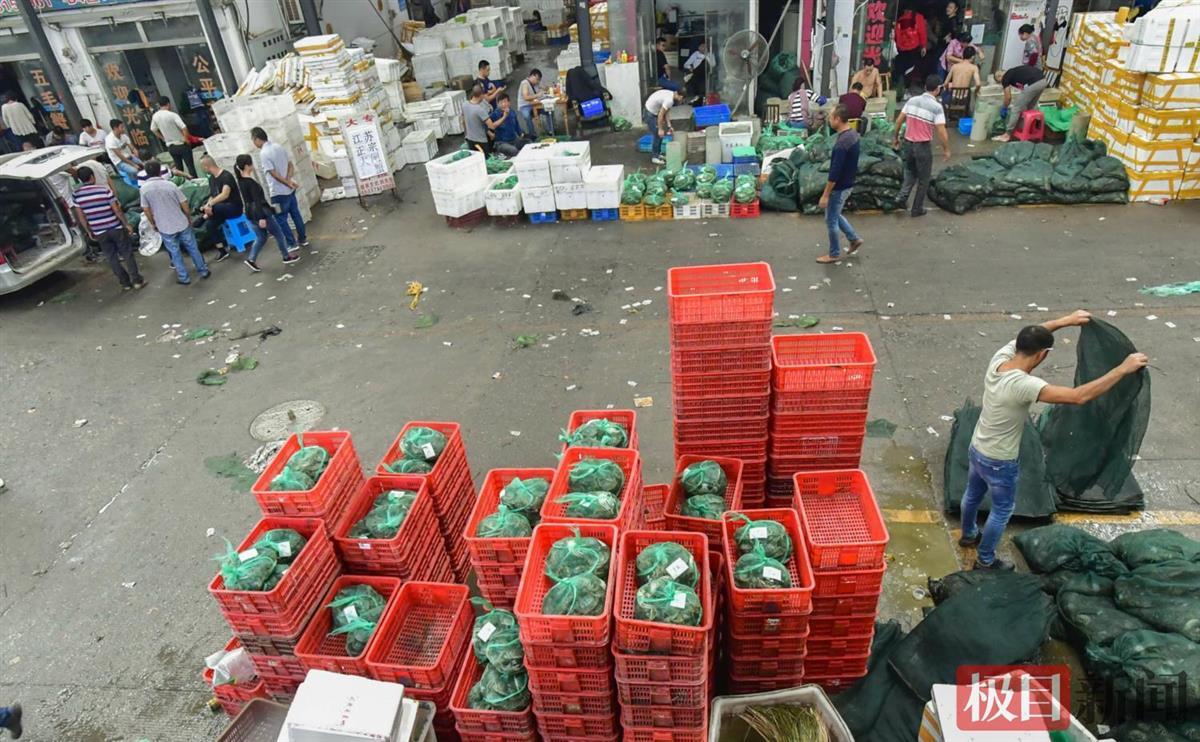
Hubei local crabs are basically sold to all parts of the country through Baishazhou agricultural and sideline products market. According to wholesalers, nearly 1 million kilograms of crabs can "climb" from the market table every day before the National Day, and with the crabs in the province truly concentrated after the Double Ninth Festival, the supply on the market will be even greater.
In Baishazhou agricultural and sideline products market, the wholesaler Boss Yang introduced that in the past ten days after the Mid-Autumn Festival, the number of crabs entering the market has almost doubled, and the main force is still Jiangsu crabs. The local crabs in Hubei have started to increase in the last week, and the price is not high. The citizens can "fork" to eat crabs during the National Day Golden Week.
The reporter learned from the fishery department of our province that crabs in Honghu, Xiantao and Jianli, the main crab producing areas in the province, are still in a state of "exploring the market". The most important reason is to wait and see on the basis of participating in marketing, hoping to raise crabs until they are fully mature and then concentrate on shipping.
According to industry insiders, according to the different breeding laws of each producing area, crabs in Xiantao and Tianmen areas will really concentrate on water before and after the Double Ninth Festival on October 14; The freshwater crabs in Honghu Lake will be shipped in large quantities at the end of October and sold to the whole country; Jianli production area started the mode of peak-to-peak competition, focusing on the consumer market from December to the Spring Festival, so it chose to fish at the end of the year. This also means that after the National Day, citizens can not only eat crabs with higher cost performance, but also eat them from autumn to the next spring.
For more exciting information, please download the "Jimu News" client in the application market. Please don’t reprint it without authorization. Welcome to provide news clues and pay them as soon as they are adopted.