Warm and inspirational or cruel and dark: real-life adaptation of the film Japan, South Korea, Europe and America PK
This article was first published in the film industry. Welcome to pay attention (WeChat search filmmore).
1905 movie network exclusive On April 14, I landed in the mainland cinema on the strength of spring. A counterattack story of a poor Japanese student, labeled as "adapted from a true story", was shown in China with such a similar educational environment. Will the audience really buy it?
The cinema has always been a place to dream. The twists and turns of bizarre stories and imaginative ideas have almost become the necessary conditions to attract us into the cinema, but "adaptation based on real people’s stories" has added some authenticity to this dream.
Outside Japan, the film markets in South Korea and Europe and the United States seem to have a special liking for this kind of works in recent years, and there are many excellent works in this kind of films. However, some of them can export to foreign countries to play brands, and some still need to wait for the further development of the market … …
Let’s take a look at the differences between live-action movies in these countries and regions in recent years, and what position such movies are in their respective markets:
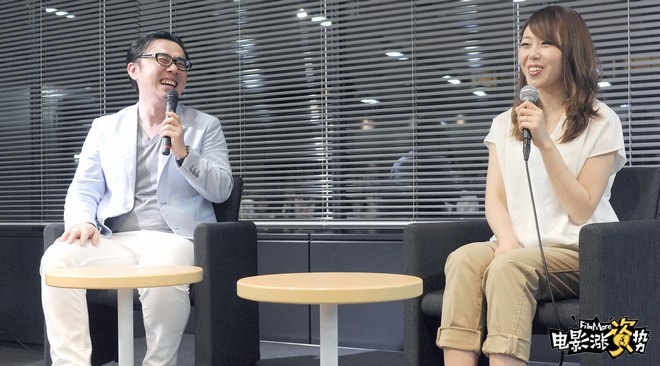
The archetypes of "The Spice Girl at the Bottom" are Hirata Shingui (left) and Saya Kobayashi Jia (right)
[Japan]
Delicate, gentle, human and cruel in plain: a slow-motion literary film focusing on a small pattern
In fact, there are very few Japanese films that are clearly based on real people’s stories. The last such film that caused great commercial success may be traced back to the story of loyal dogs and eight public officials in 1987. However, in Japanese literary films, the long lens, which has always been slow and delicate, and the length of the film is always two hours, itself makes many works naturally have the texture of biased documentary.
This kind of temperament can be found in the well-known films in recent years. Although some of these works are original scripts and some are adapted from novels, most of them are not so exaggerated and dramatic.
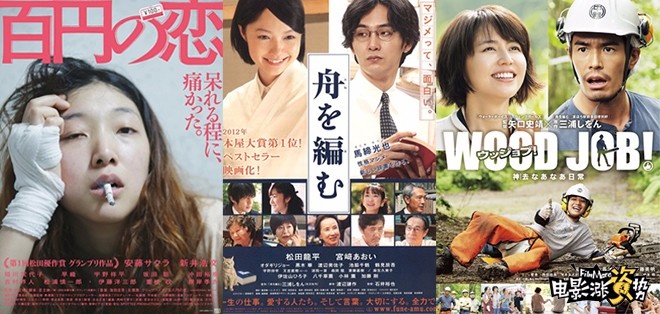
Love of a Hundred Yuan (left), The Story of Weaving a Boat (middle), Where’s the God Going to the Village (right)
On the other hand, works on typical realistic issues such as family, parents and children are still very popular, and the source of inspiration for works often has sufficient realistic basis:
For example, Hirokazu Koreeda’s hit film in 2013 exceeded 500 million yen in the first week of its release, and won the weekly box office title. In the stage of script writing, Hirokazu Koreeda once took part in the reportage of Osuke Ono, which recorded many baby cuddles in Okinawa and other places during the period of high economic growth in the 1970s, while Hirokazu Koreeda himself was thinking about the relationship between himself and his daughter, and his creative ideas sprouted.
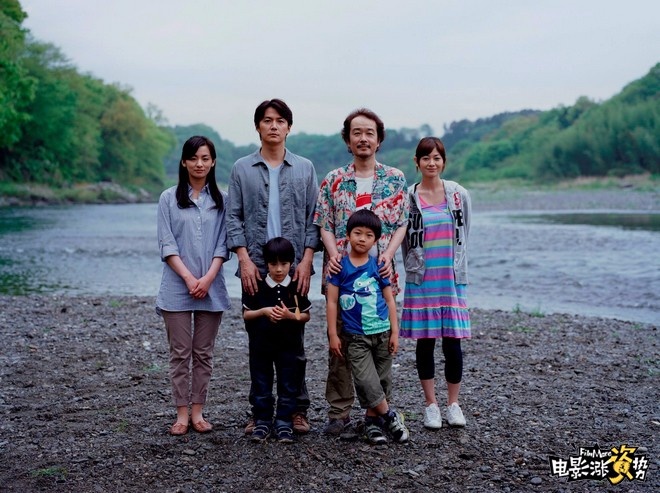
Family is a topic that can never be avoided in Japanese movies. The picture shows the stills of "Like a Father as a Son".
In recent years, the simple aesthetics of "living in a low place" has not changed essentially in Japanese movies where the real prototype can be found exactly. Besides dramatic exaggeration, the cruelty of reality is often more biting:
For example, the prototype is the love story of science fiction writer Mimura Zhuo and his wife Yuezi: after learning that his wife has cancer, the writer writes a story to her every day just to make her laugh. So this film is accompanied by the unconstrained style in the writer’s story and the increasingly weak wife in reality. In the end, we found that the loss of a lover is sad, but the complete loneliness that a writer feels when he loses his only reader is the most heartbreaking.
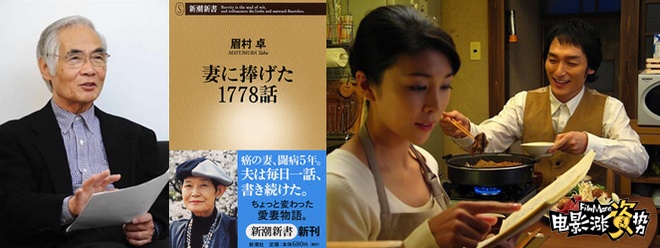
The prototype story of "1778 Stories of My Wife and I" actually happened in the twilight years of Meicun Zhuo (left) and his wife Yuezi.
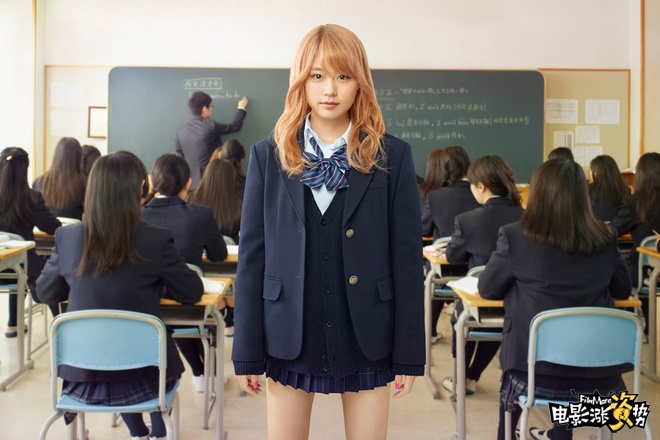
The Spice Girl at the Bottom has created greater commercial influence: in the 2015 Japanese box office list, the film ranked 16th with a score of 2.83 billion yen, second only to 3.12 billion yen (which is unimaginable for China audiences who love special effects movies).
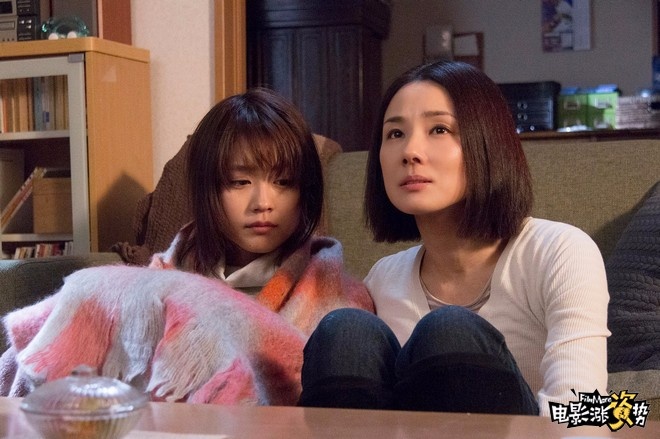
Yoshida sheep (right), who plays the spice girl’s mother, was nominated for "Best Supporting Actress" in the 39th Japan Film Academy Award for this film.
But in fact, it doesn’t stop there. The film honestly exposes all kinds of sharp problems in Japanese family and campus life: for example, the younger brother of the spice girl was kidnapped by the ideal imposed by his father when he was young, and he didn’t even know what he really wanted to do. Is this still an inspirational story for him? The spice girl’s mother was suppressed by her husband’s male chauvinism, and she still endured humiliation and thrifty housekeeping and firmly encouraged her stubborn daughter. Such a "virgin" is probably what feminists are eager to criticize at present; Teachers in spice girls’ schools not only lack guidance for students, but also encourage students to tell on each other. Can such education not make people worry?
Saya Kobayashi Jia, the real prototype of the spice girl, is at the bottom, which is also the bottom of key high schools, and is what we often call "phoenix tail"; The family has three children, but also can study in private schools and attend cram schools for one and a half years so frequently. Such economic strength is obviously beyond the affordability of ordinary families. In the words of a netizen: "There is a reason for miracles. The biggest reason here is money, and this is probably the status quo of Japanese society."
For the above content, the audience in China may be able to feel the same way. I hope they don’t want to spend money to go to the cinema to see such a film with no special effects, no big-name stars and amazing duration. I’m afraid the answer is not so optimistic.
Next page: [Korea] Abuse of heart and tears, in-depth disclosure of disadvantages: applause and seat-calling, with far-reaching social impact.